Project archive
Meter
Time tracking for people and their agents.
- My role
- Creator and main author, about three quarters of its 1,000+ commits
- When
- September 2026 — present, at Prosper Digital
- Original
- meter.pike.network
- Archived
A copy kept here in case the original moves, goes offline, or I lose access to it.
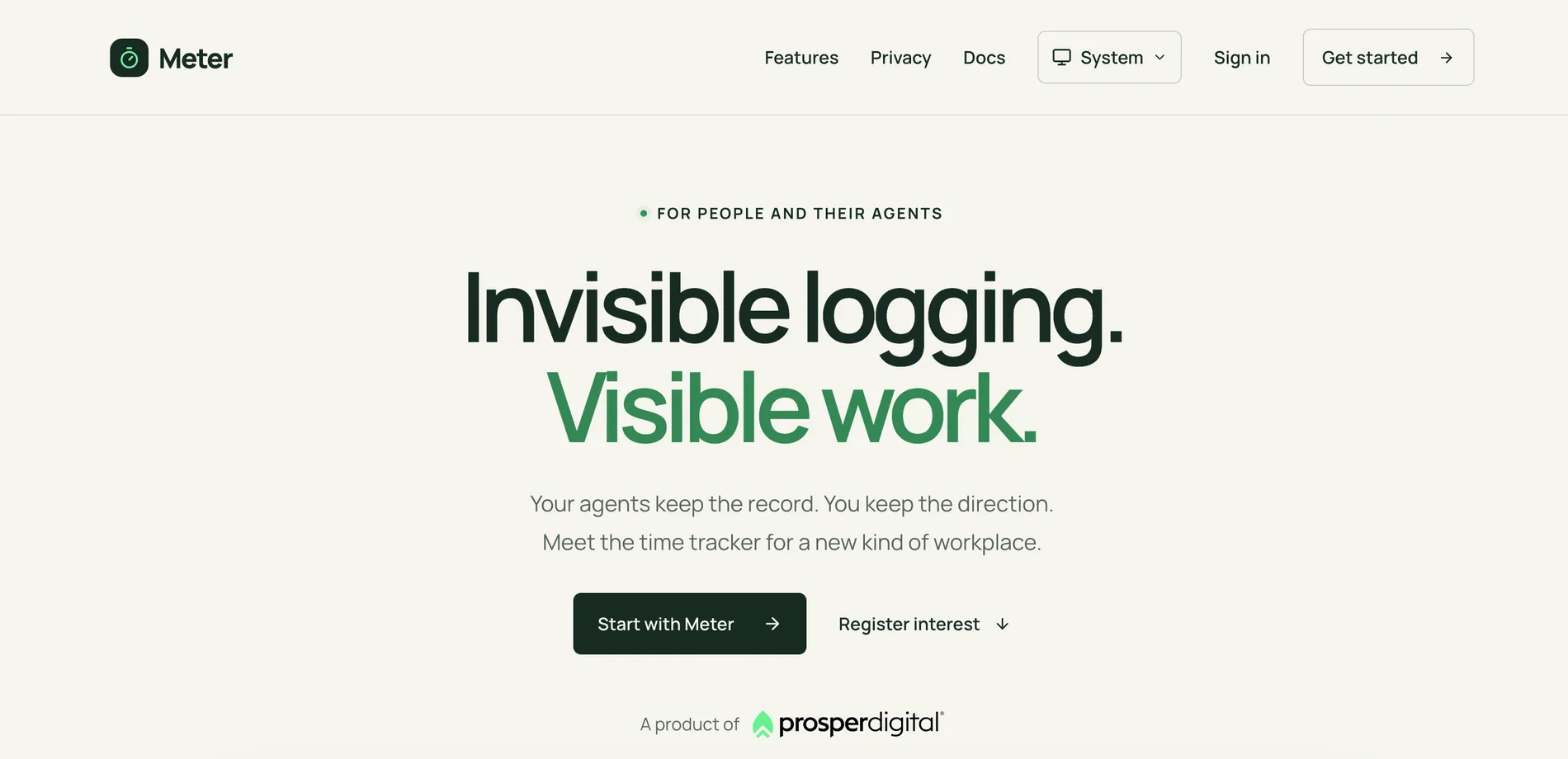
Meter is a time tracker for teams where people work alongside AI agents. The agents log their own sessions; people keep the direction. I built it at Prosper Digital, where the team uses it to see the work behind the work: who did what, which agent helped, and where people stepped in. Screenshots are from Meter's public site and show its demo data.
Automatic agent logging
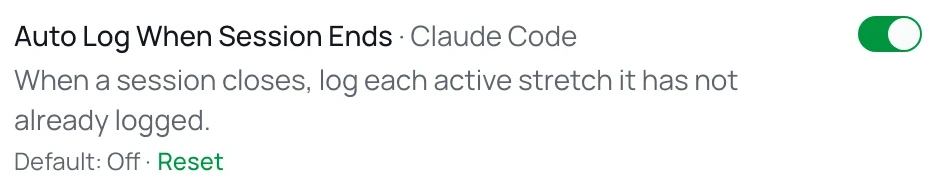
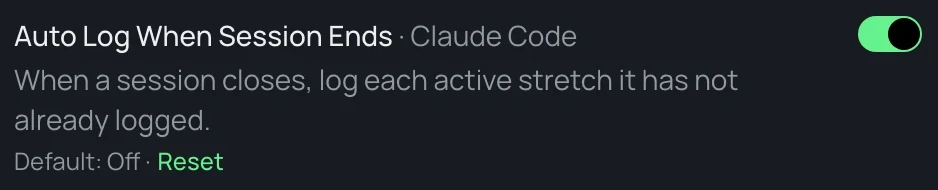
Meter connects to Claude Code and Codex through MCP and plugin hooks. The agent logs as it works: observed session time, project, model and token usage, without anyone reconstructing their day. An optional safety net logs a Claude Code session when it ends.
A clearer picture of time
People and agents rarely work in a straight line. The weekly agenda shows sessions side by side, groups an agent's work into piles, and counts overlapping minutes once per person, so tracked time and clock time stay honest.
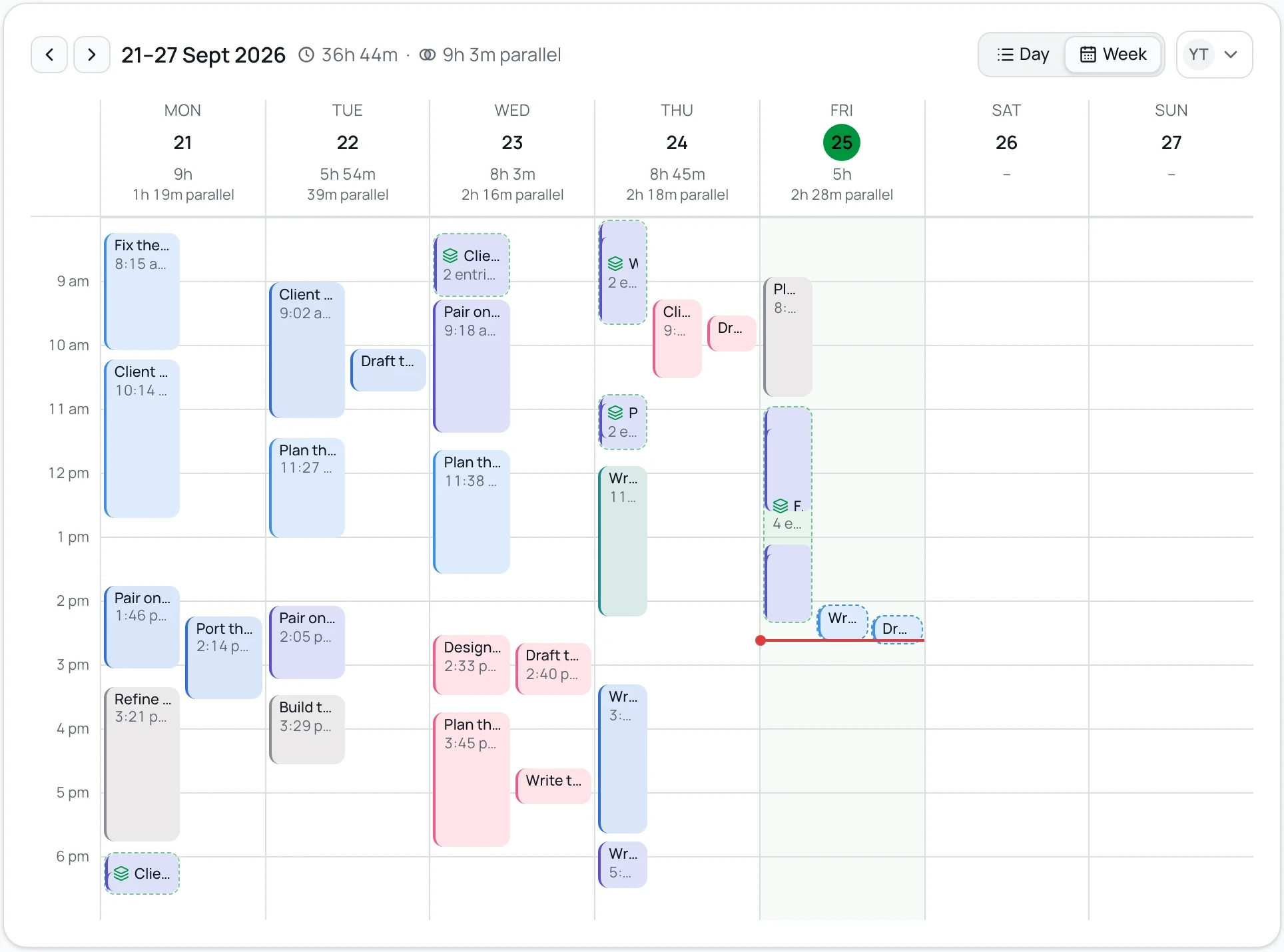
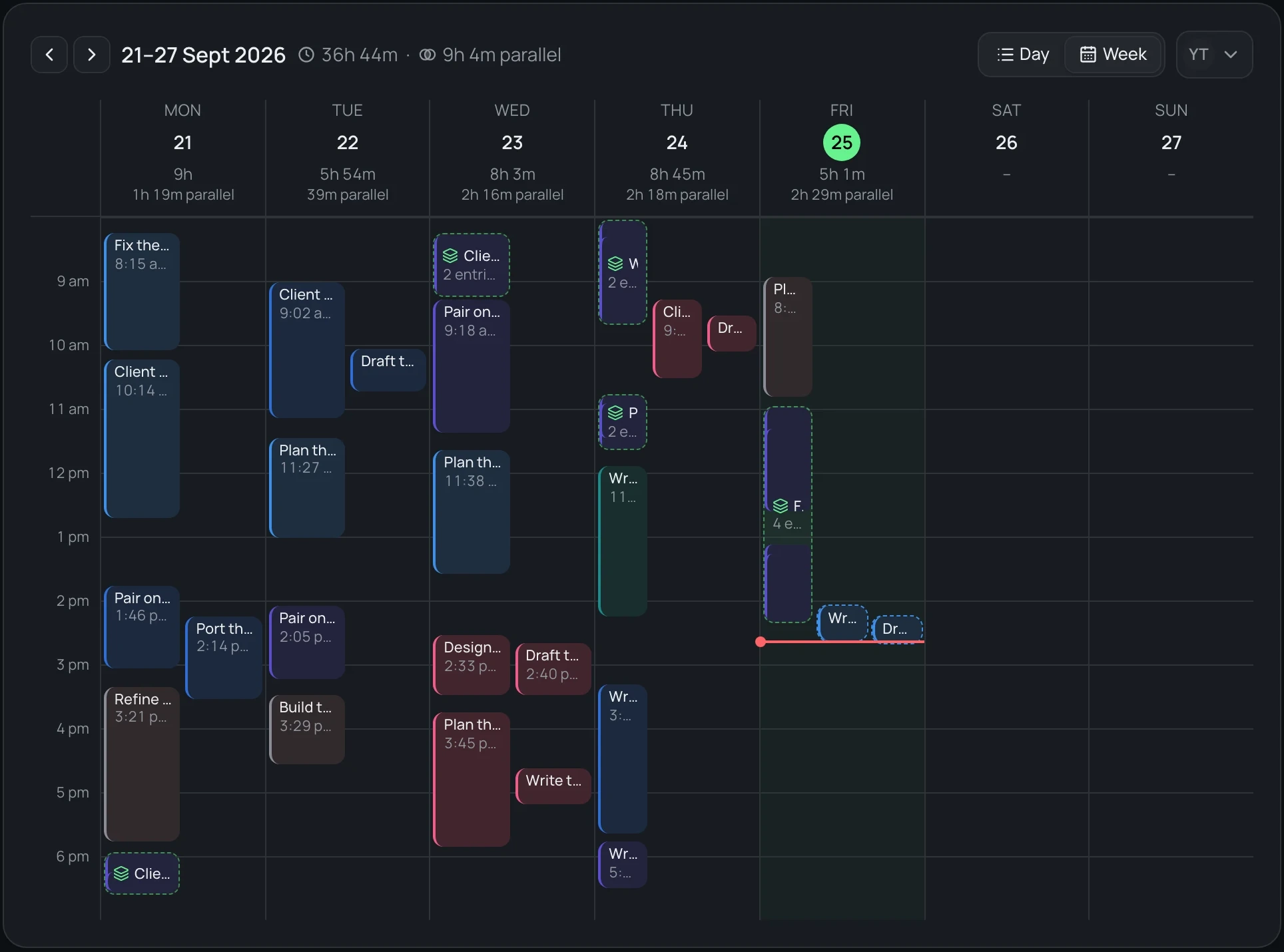
Agent assist puts a person's own timer and their agents' sessions on one timeline, so the human contribution stays in the picture.
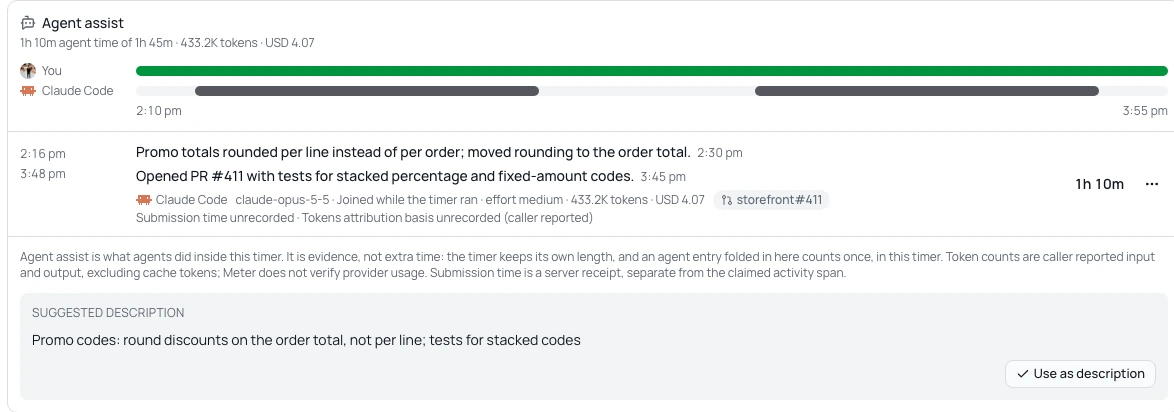
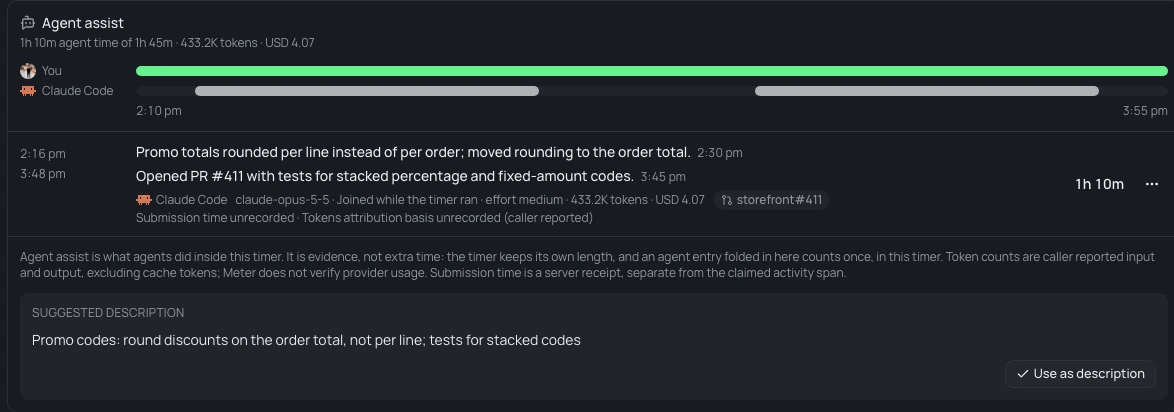
Human direction
Agents do the work; people steer it. Meter records observed moments of steering (instructions, corrections, reviews, decisions and verification) so a team can reflect on how it works with AI. It is context, not a productivity score.


From these moments I built Helm, an experimental unit of human effort per ticket. It aims to gauge how complex the work was, not to act as a timesheet.
Shared understanding
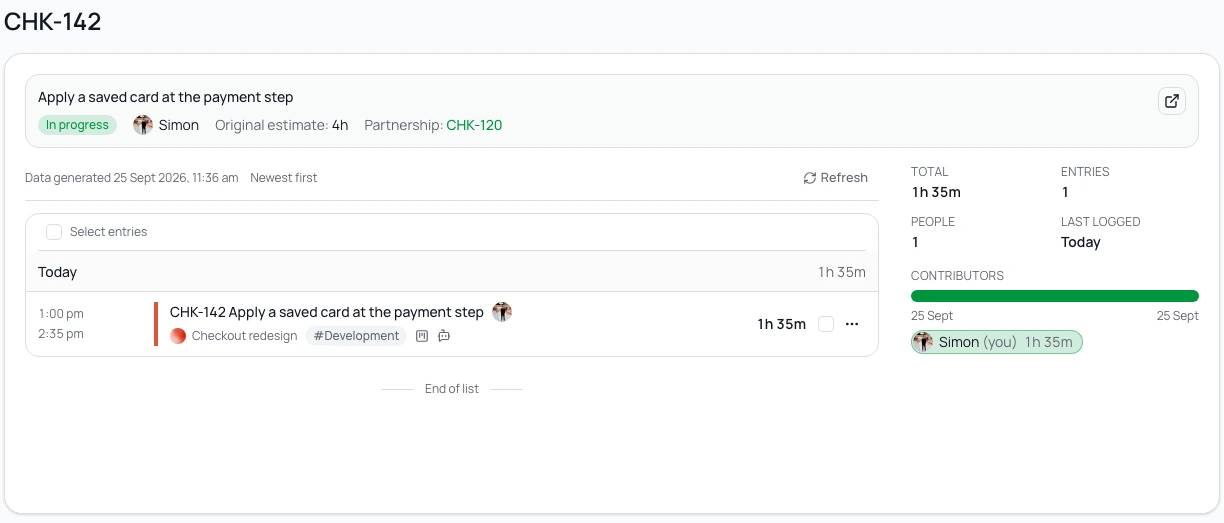
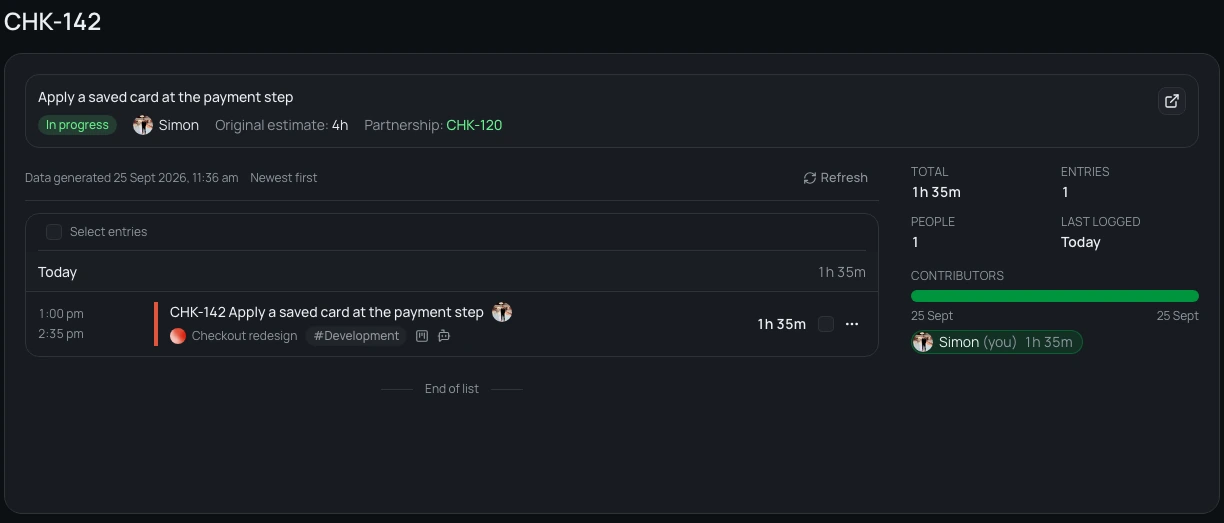
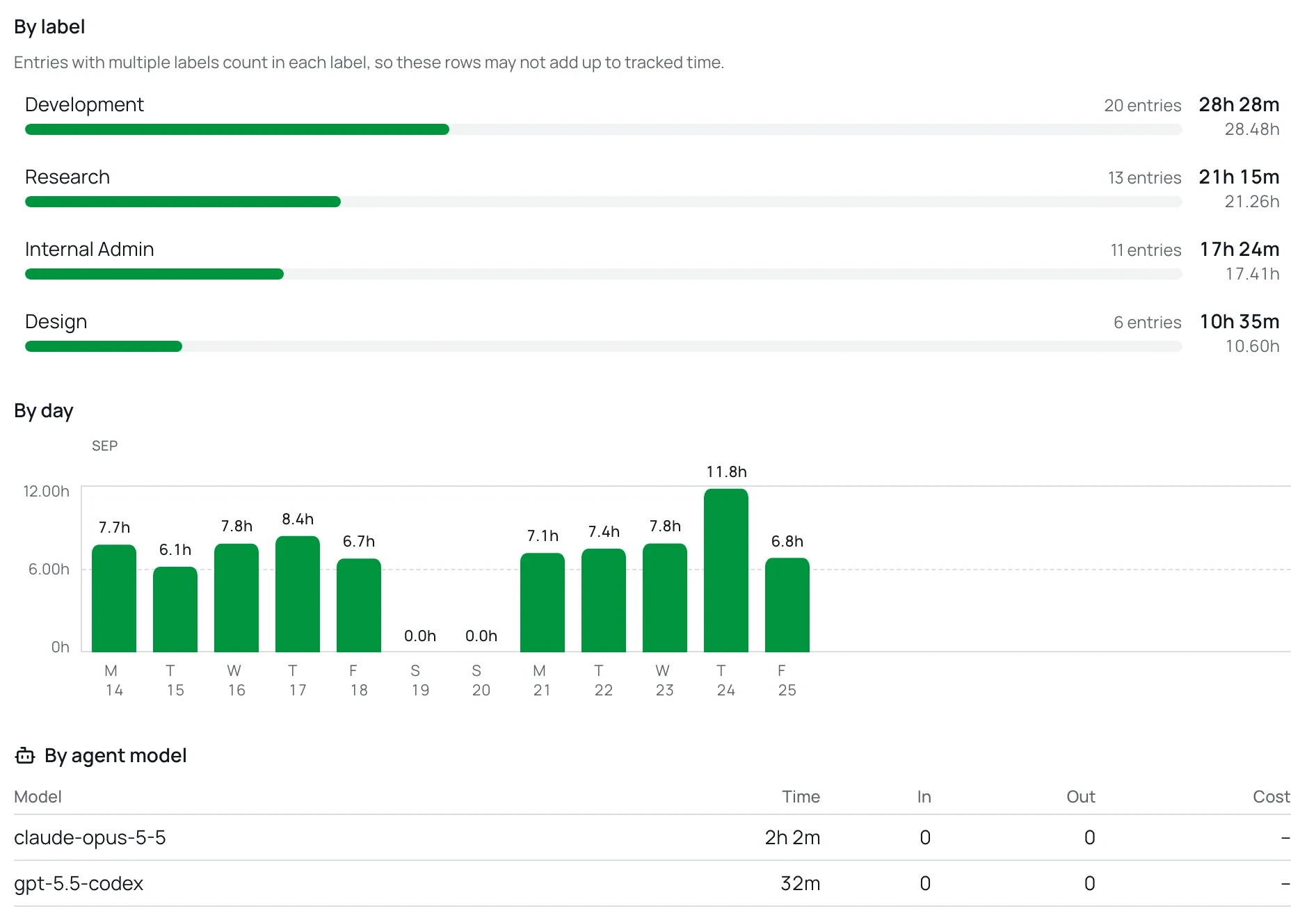
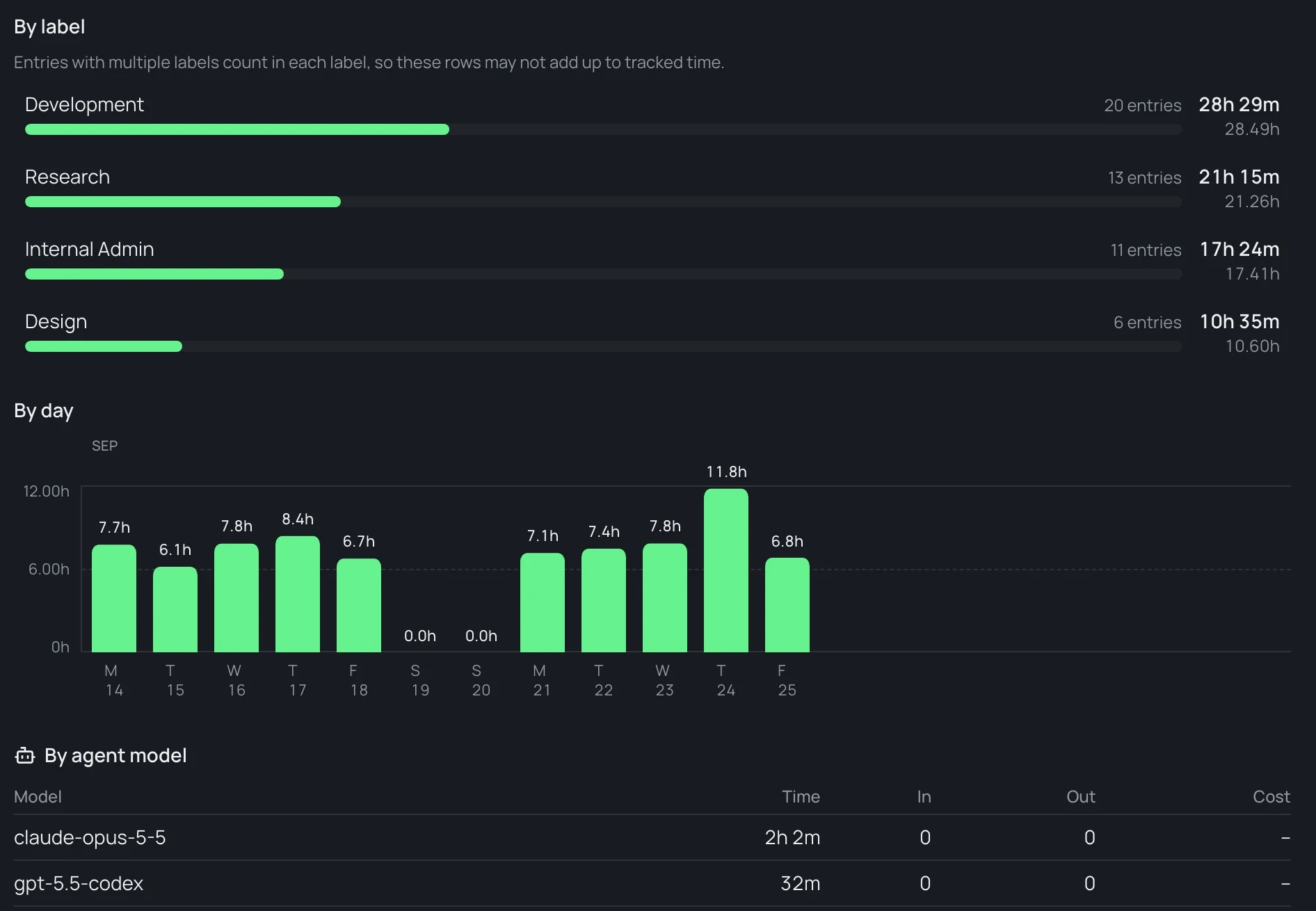
Entries link to Jira issues and GitHub work, so a ticket can be followed from its estimate to the people and sessions behind it. Reports group time by project, label, day and agent model.
Privacy with clear boundaries
Attended time is measured from timestamps and word counts; prompt text, replies, source files and screenshots are never sent. Raw steering evidence is limited to organisation admins, and shared views show counts and timelines within each person's permitted scope.
The original page also had a two-minute film, not copied here because of its size.